这是一份基于埃隆·马斯克(Elon Musk)的第一性原理(First Principles)思维模型以及他在 Space X 和 Tesla 推行的“五步工作法”(The Algorithm)所整理出的 15 条自我拷问清单。
这份清单旨在帮助你剥离表象,回归事物本质,解决复杂问题。
第一阶段:回归本质 (Deconstruct to Truths)
核心:拒绝类比思维,寻找物理学层面的基础真理。
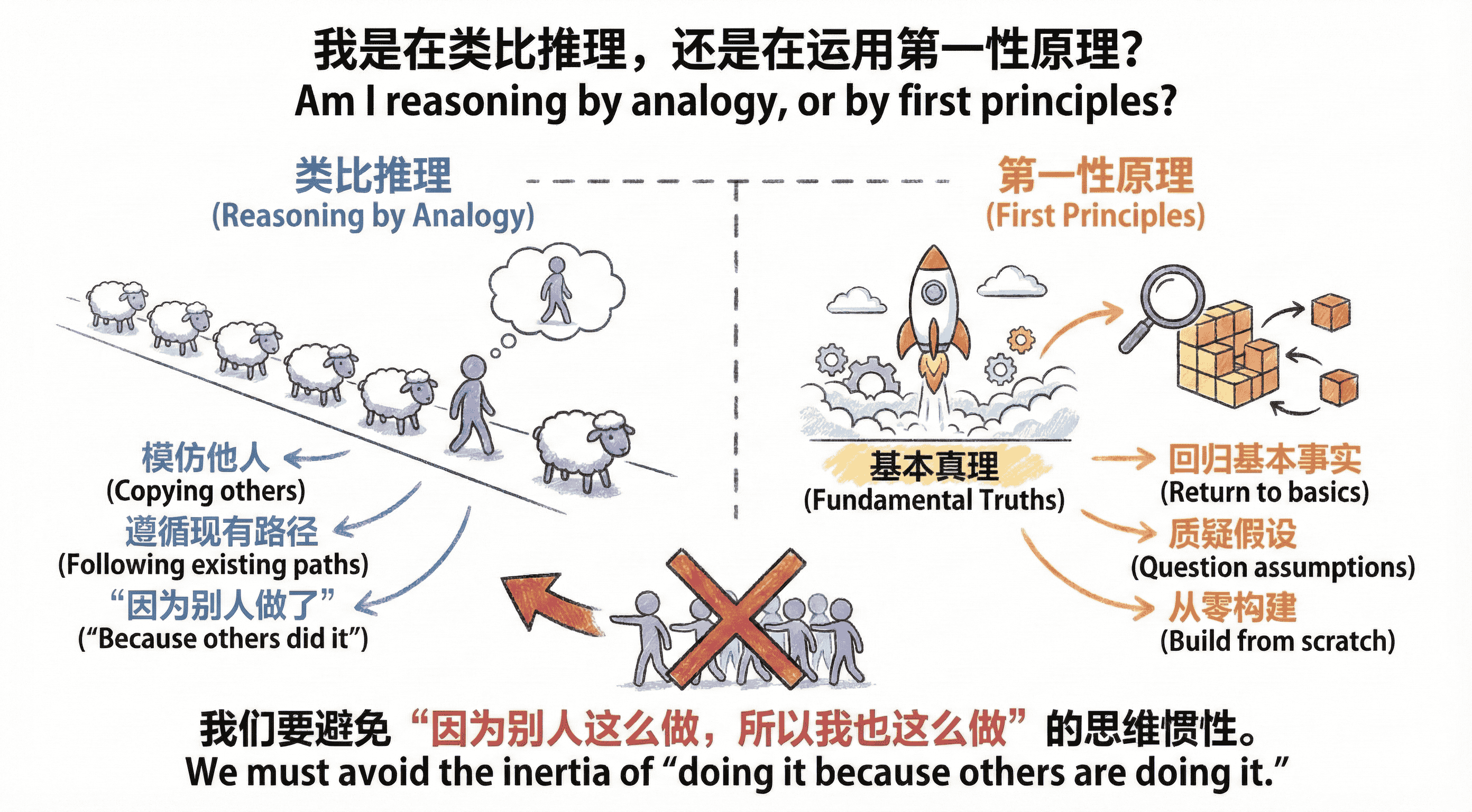
1. 我是在类比推理,还是在运用第一性原理? Am I reasoning by analogy, or by first principles?
我们要避免“因为别人这么做,所以我也这么做”的思维惯性。 We must avoid the inertia of “doing it because others are doing it.”
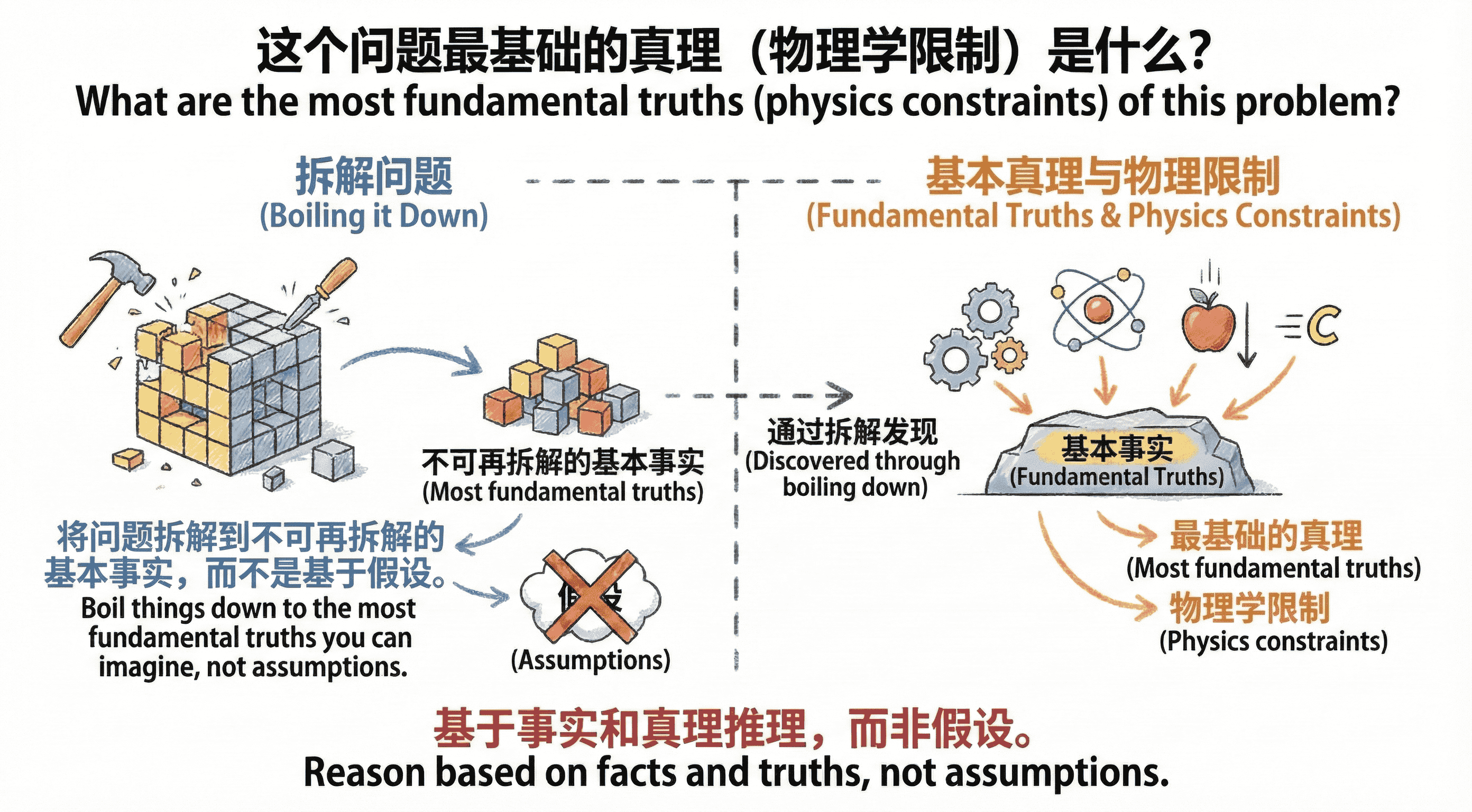
2. 这个问题最基础的真理(物理学限制)是什么? What are the most fundamental truths (physics constraints) of this problem?
将问题拆解到不可再拆解的基本事实,而不是基于假设。 Boil things down to the most fundamental truths you can imagine, not assumptions.
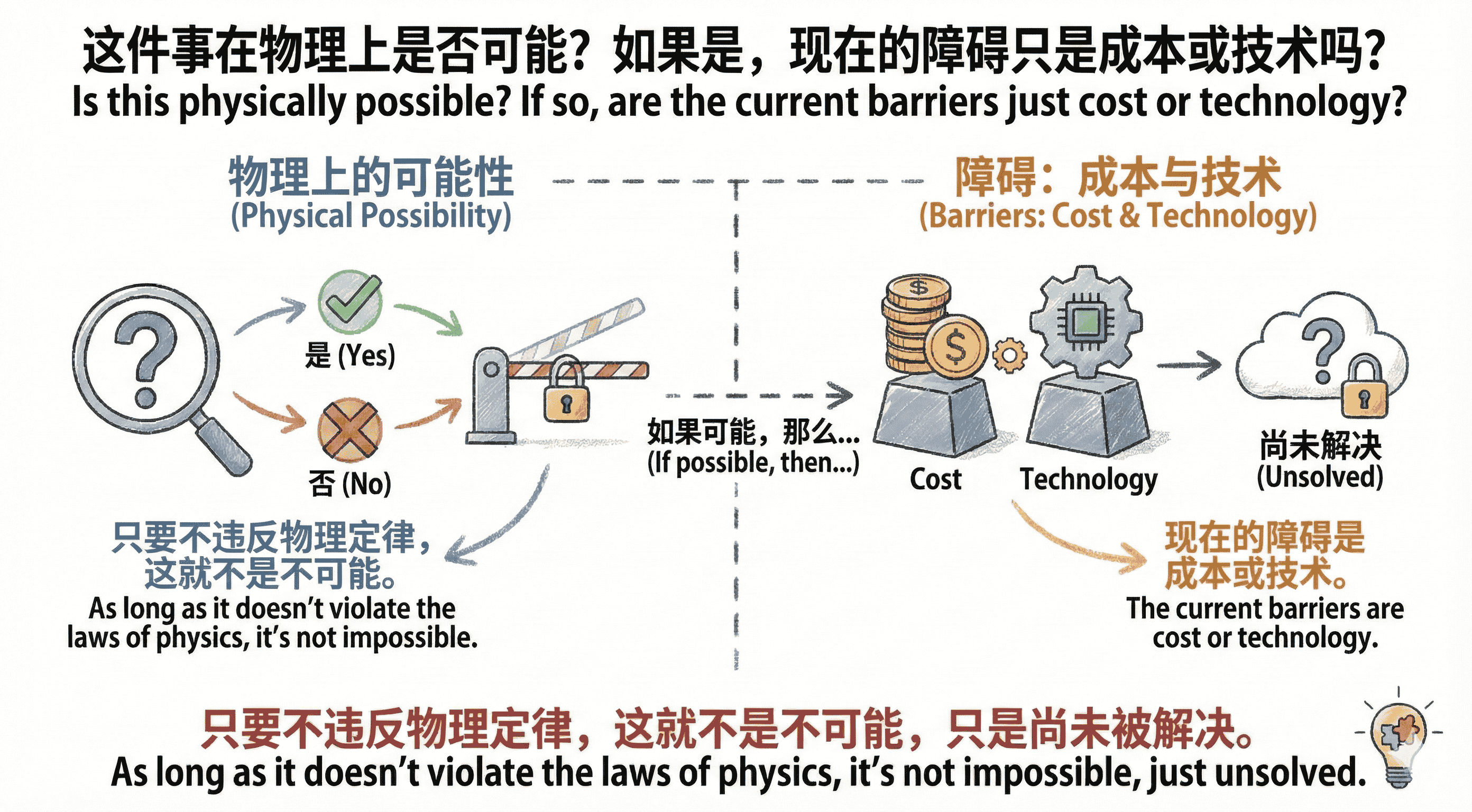
3. 这件事在物理上是否可能?如果是,现在的障碍只是成本或技术吗? Is this physically possible? If so, are the current barriers just cost or technology?
只要不违反物理定律,这就不是不可能,只是尚未被解决。 As long as it doesn’t violate the laws of physics, it’s not impossible, just unsolved.
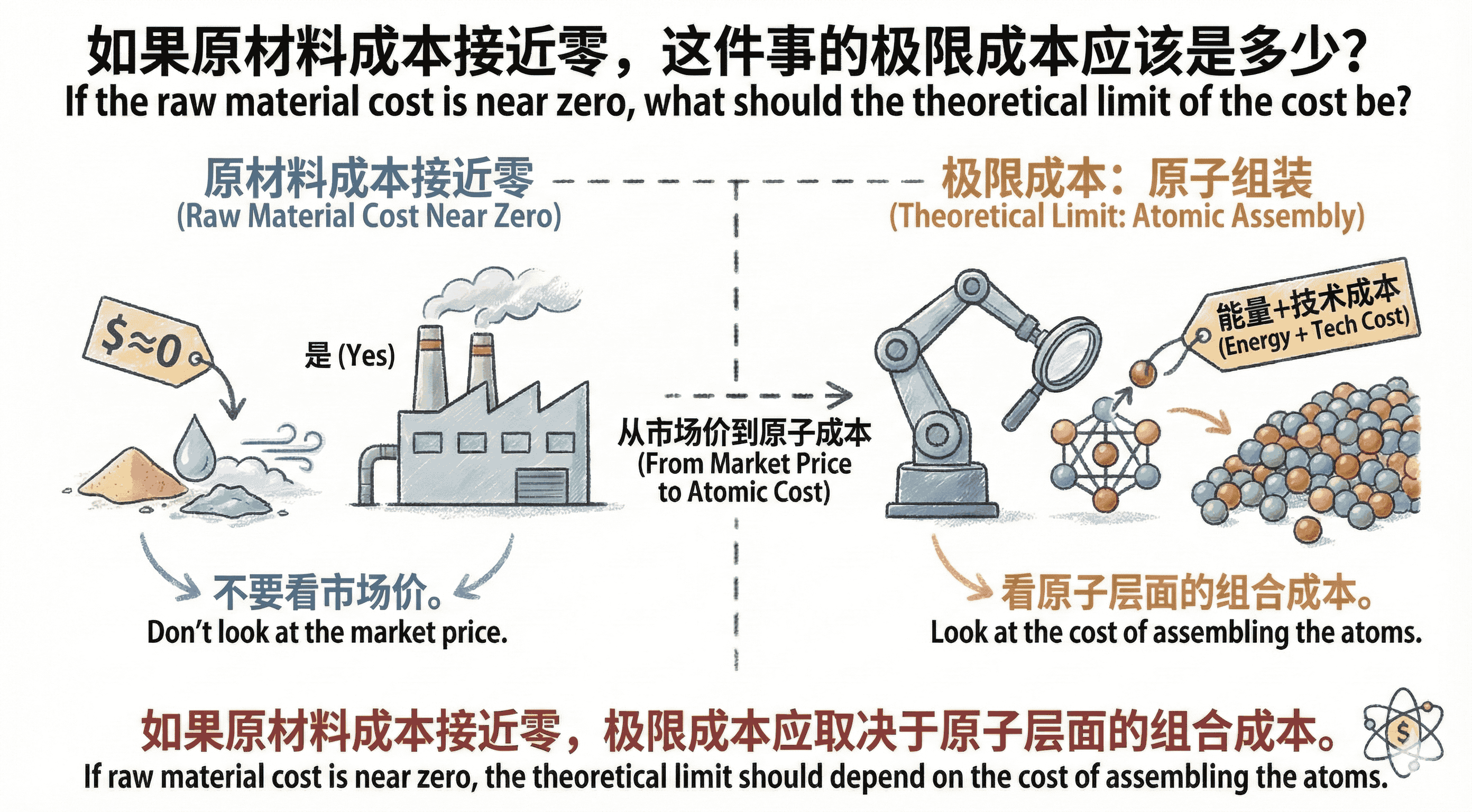
4. 如果原材料成本接近零,这件事的极限成本应该是多少? If the raw material cost is near zero, what should the theoretical limit of the cost be?
不要看市场价,看原子层面的组合成本。 Don’t look at the market price; look at the cost of assembling the atoms.
第二阶段:质疑需求 (Question the Requirements)
核心:马斯克“五步工作法”的前两步——质疑和删除。
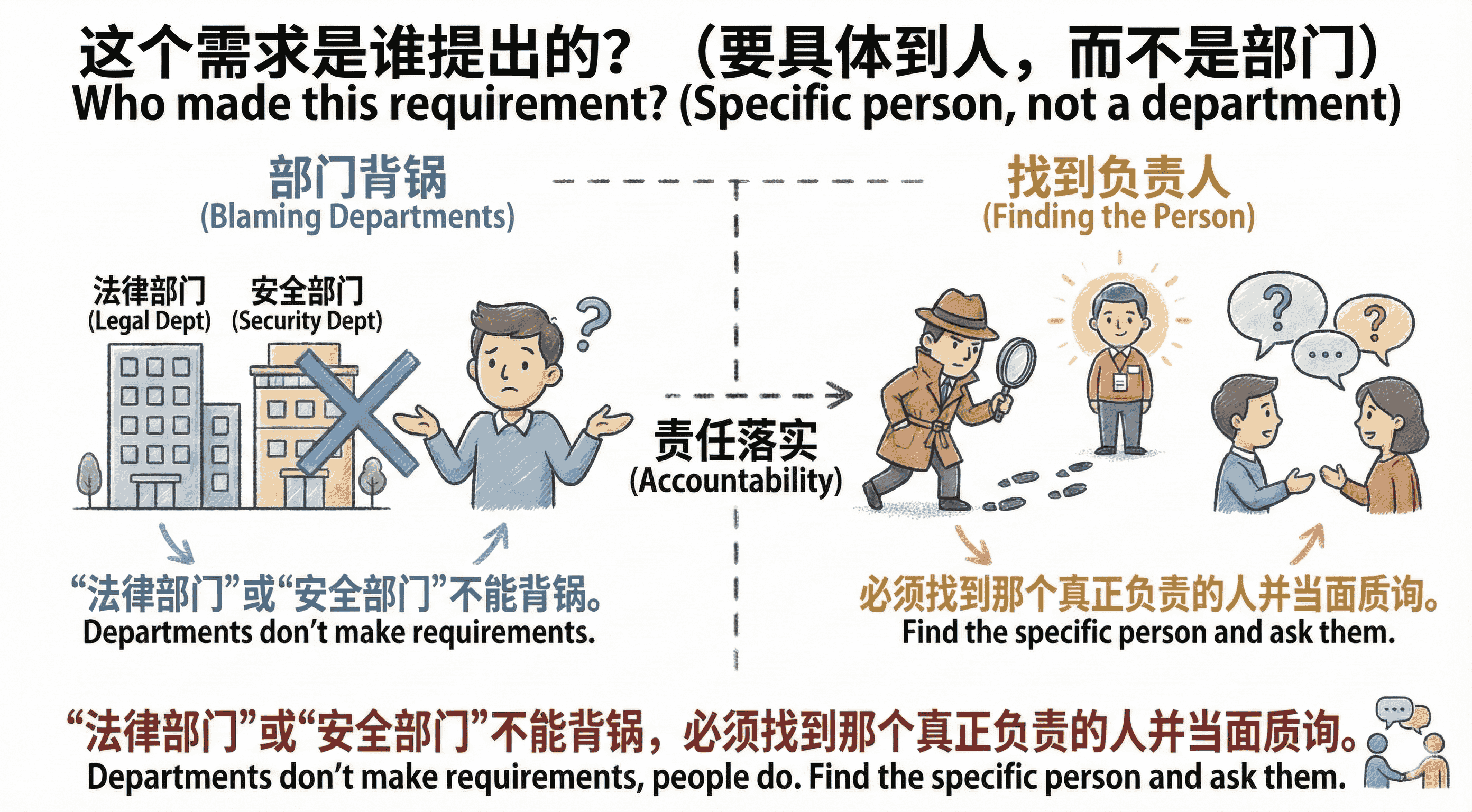
5. 这个需求是谁提出的?(要具体到人,而不是部门) Who made this requirement? (Specific person, not a department)
“法律部门”或“安全部门”不能背锅,必须找到那个真正负责的人并当面质询。 Departments don’t make requirements, people do. Find the specific person and ask them.
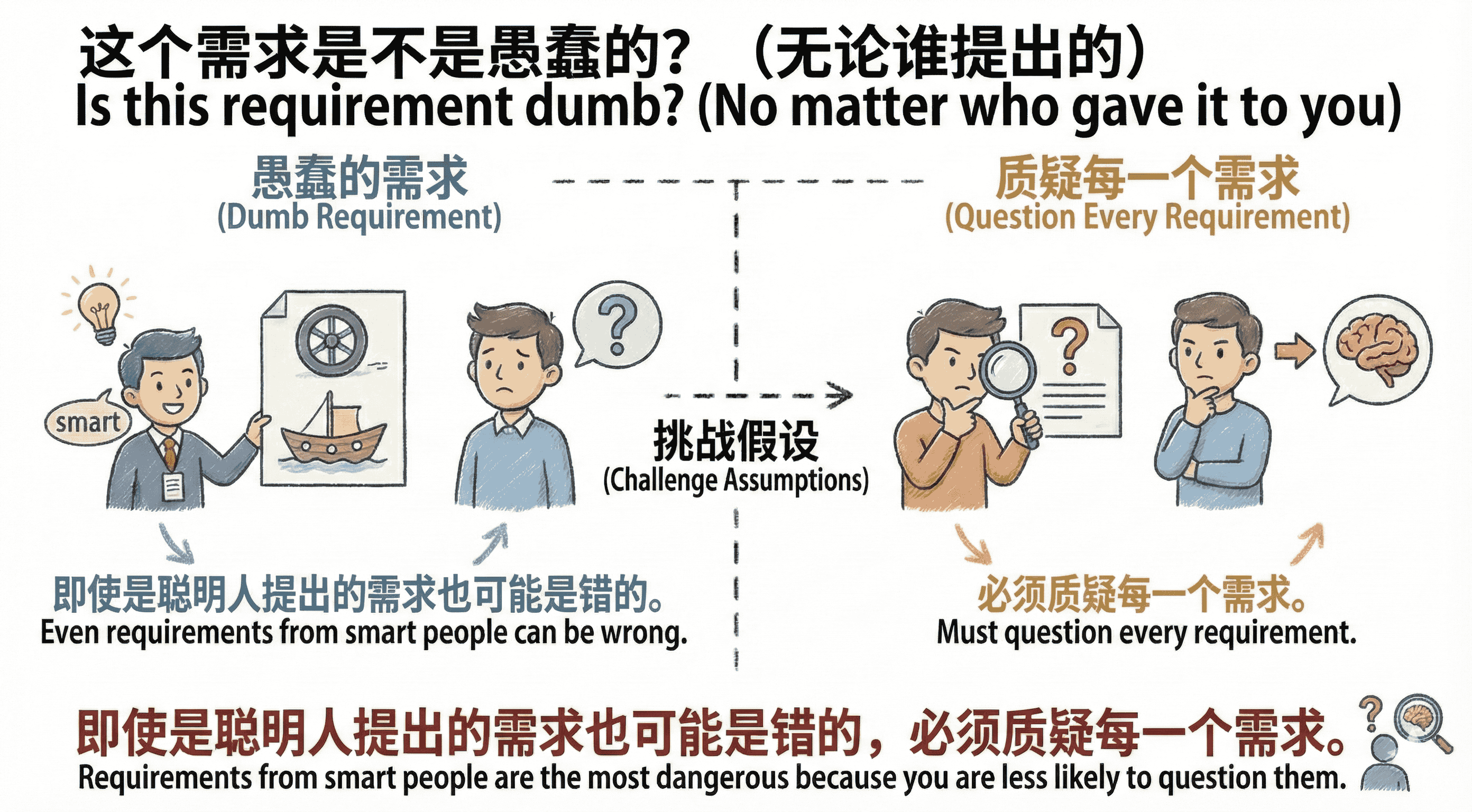
6. 这个需求是不是愚蠢的?(无论谁提出的) Is this requirement dumb? (No matter who gave it to you)
即使是聪明人提出的需求也可能是错的,必须质疑每一个需求。 Requirements from smart people are the most dangerous because you are less likely to question them.
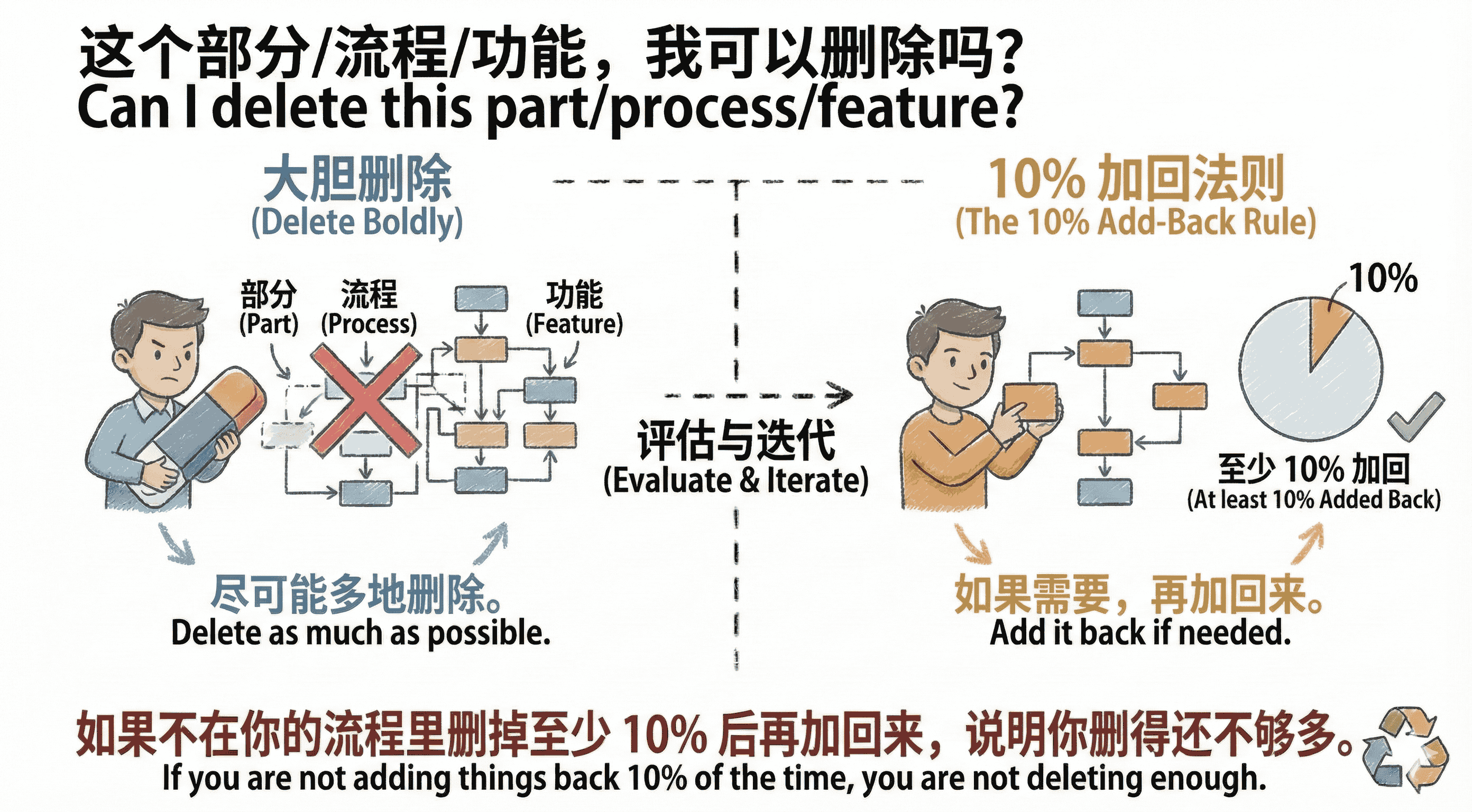
7. 这个部分/流程/功能,我可以删除吗? Can I delete this part/process/feature?
如果不在你的流程里删掉至少 10% 后再加回来,说明你删得还不够多。 If you are not adding things back 10% of the time, you are not deleting enough.
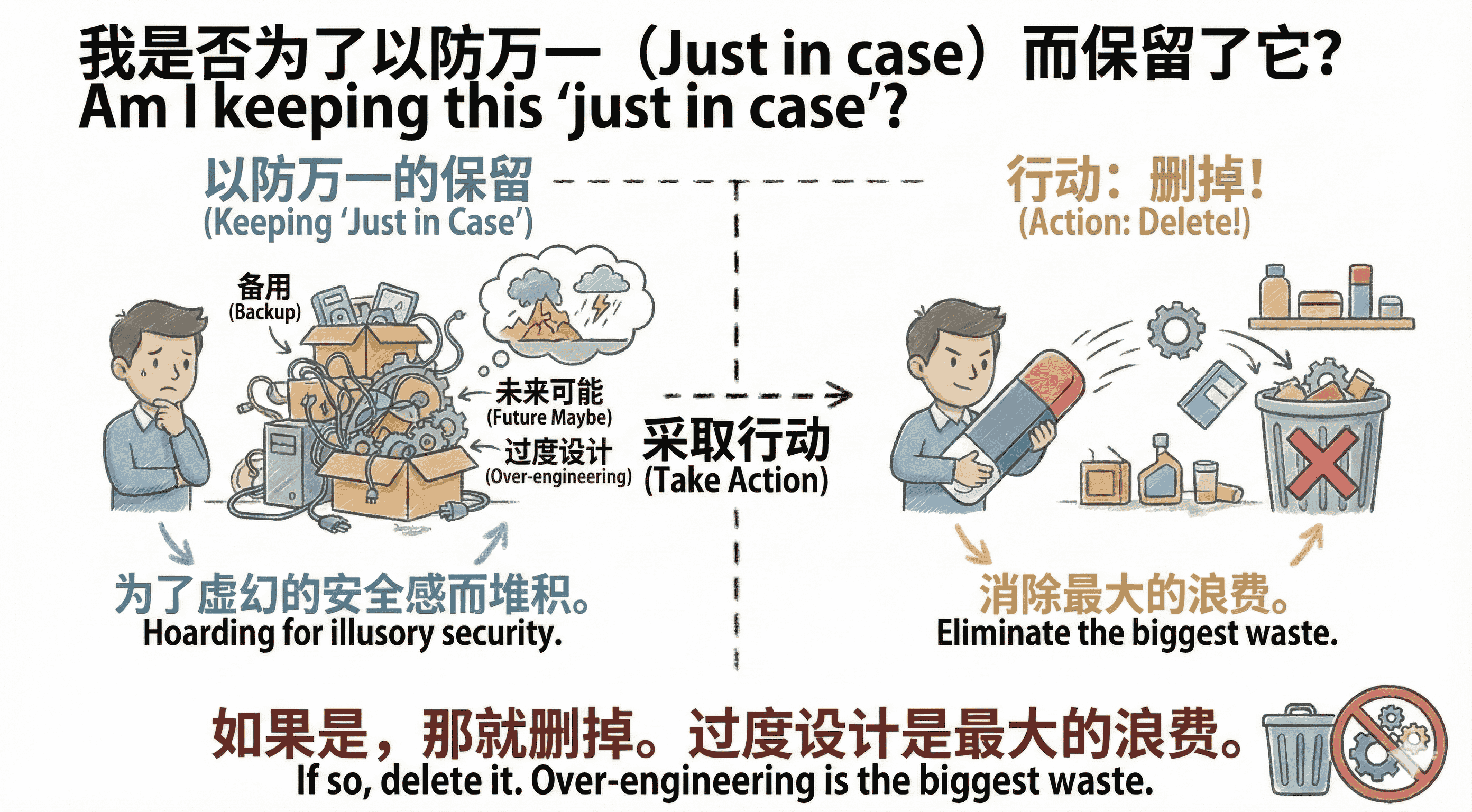
8. 我是否为了以防万一(Just in case)而保留了它? Am I keeping this “just in case”?
如果是,那就删掉。过度设计是最大的浪费。 If so, delete it. Over-engineering is the biggest waste.
第三阶段:优化与加速 (Optimize & Accelerate)
核心:马斯克“五步工作法”的后三步——简化、加速、自动化。
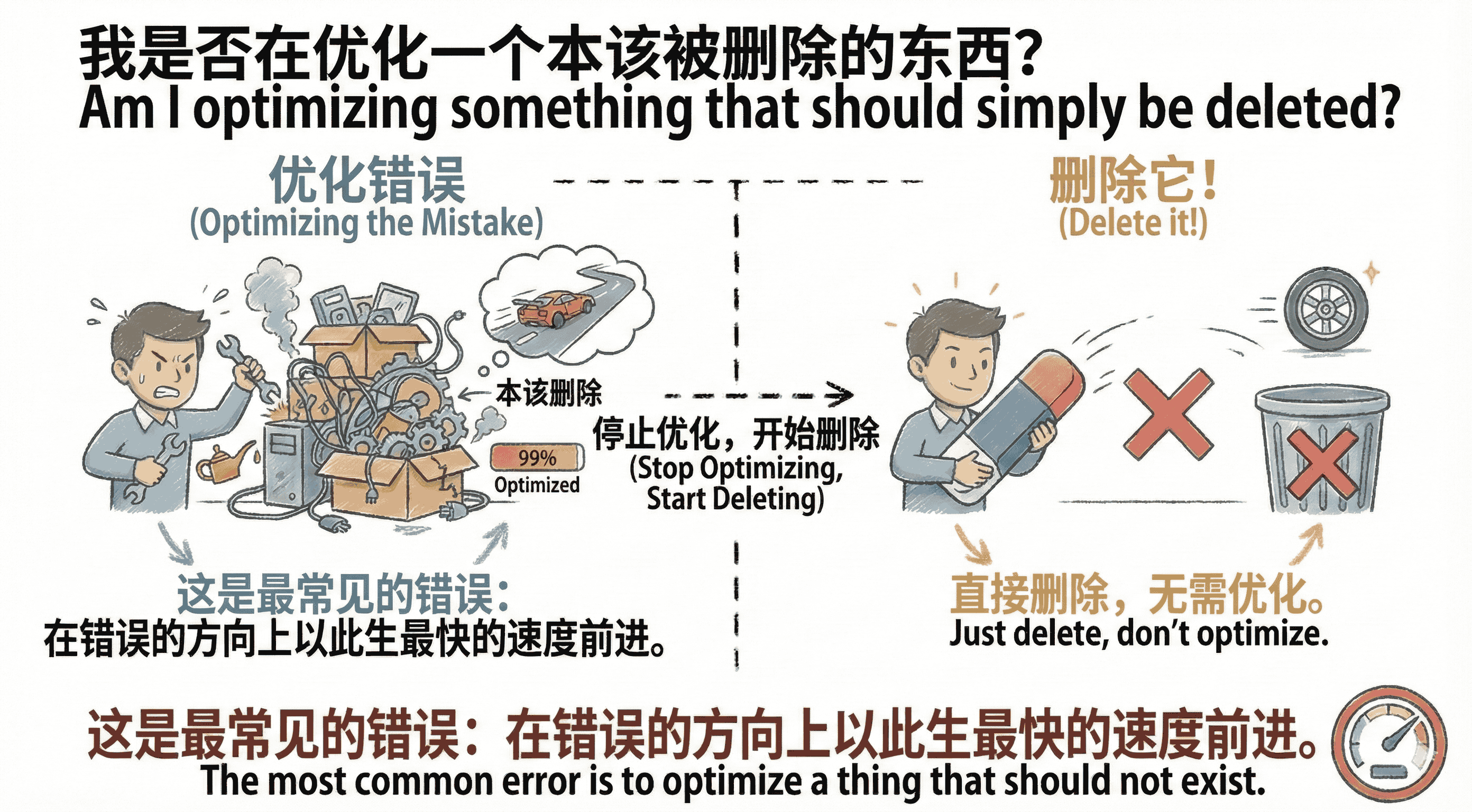
9. 我是否在优化一个本该被删除的东西? Am I optimizing something that should simply be deleted?
这是最常见的错误:在错误的方向上以此生最快的速度前进。 The most common error is to optimize a thing that should not exist.
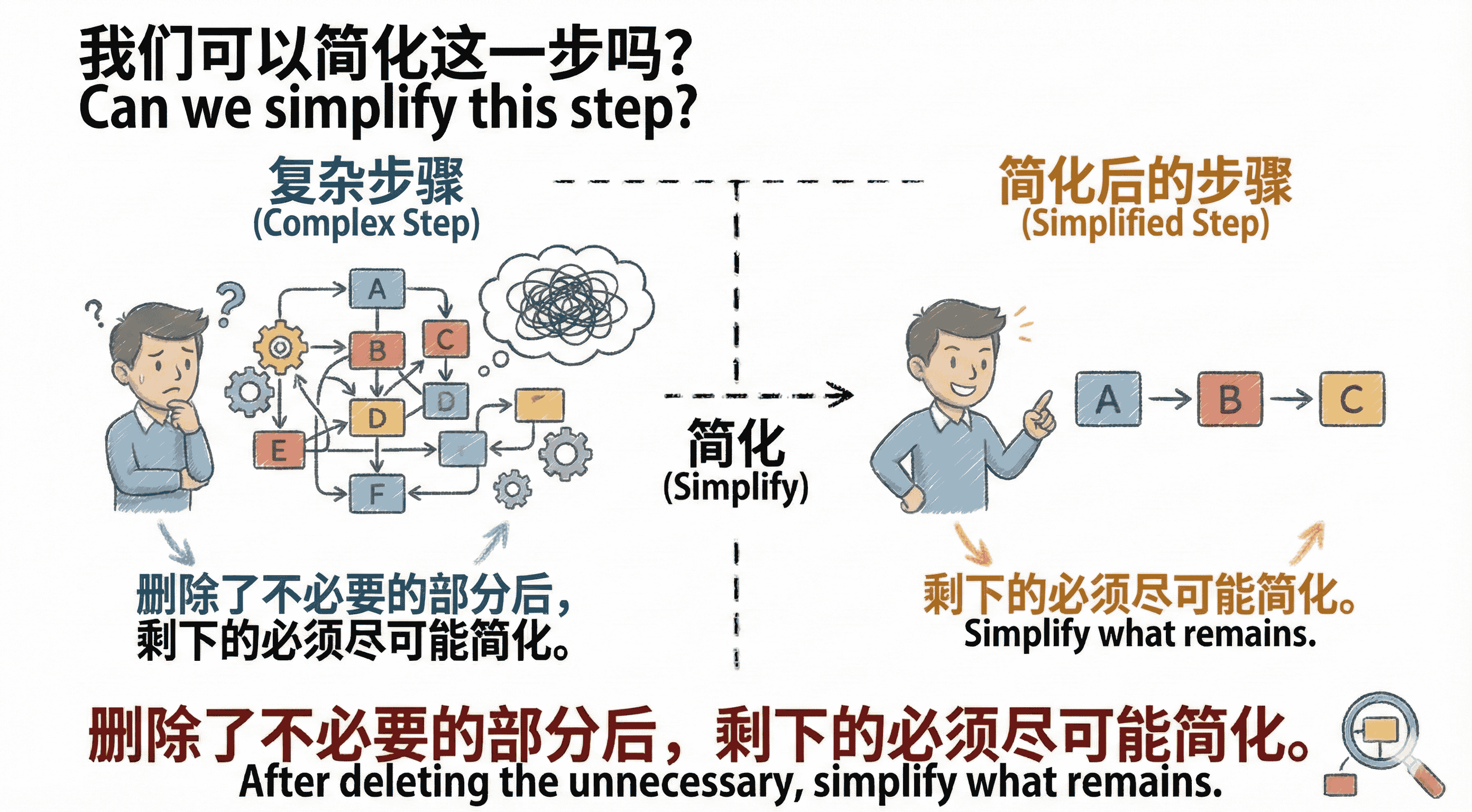
10. 我们可以简化这一步吗? Can we simplify this step?
删除了不必要的部分后,剩下的必须尽可能简化。 After deleting the unnecessary, simplify what remains.
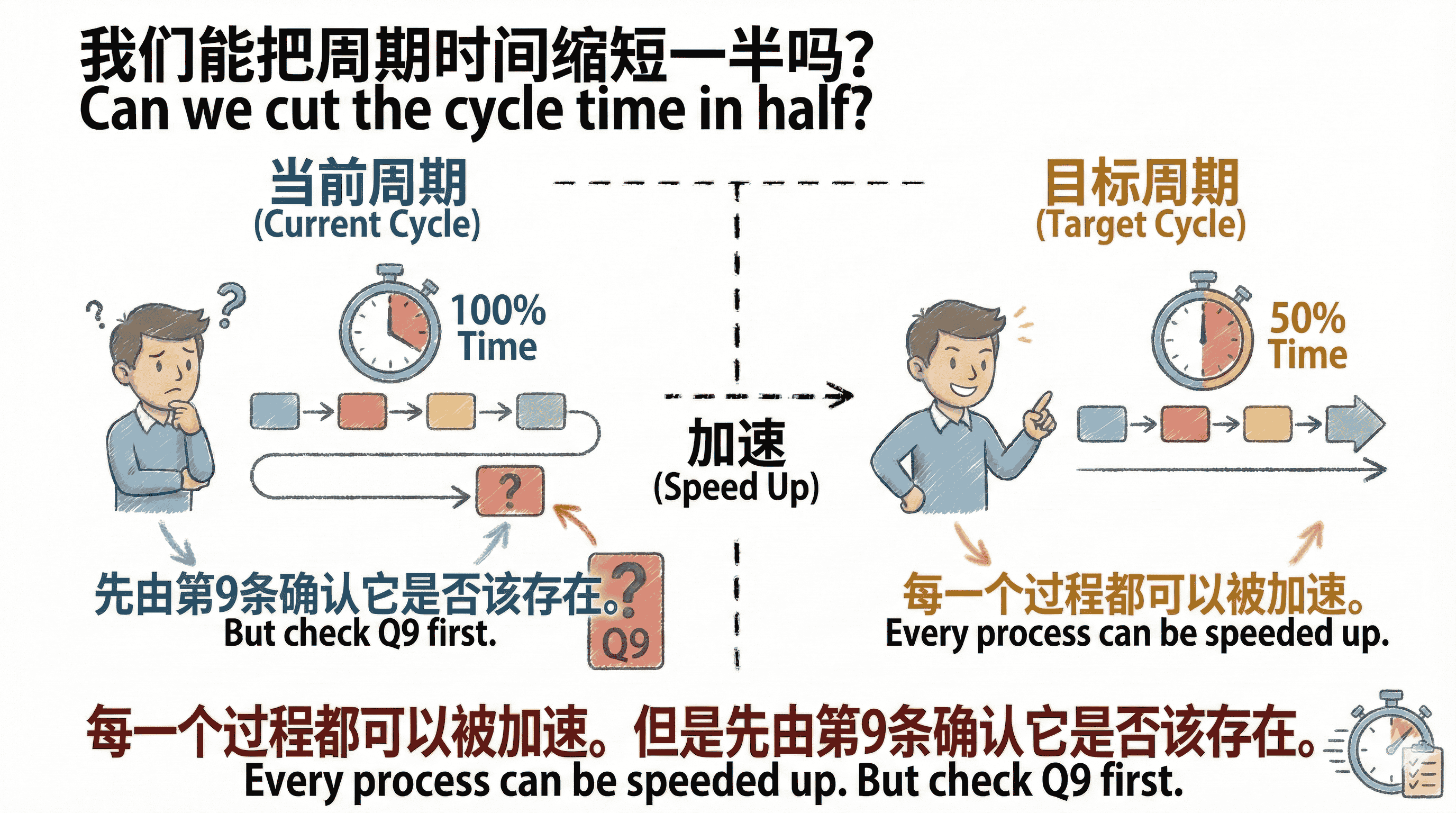
11. 我们能把周期时间缩短一半吗? Can we cut the cycle time in half?
每一个过程都可以被加速。但是先由第9条确认它是否该存在。 Every process can be speeded up. But check Q9 first.
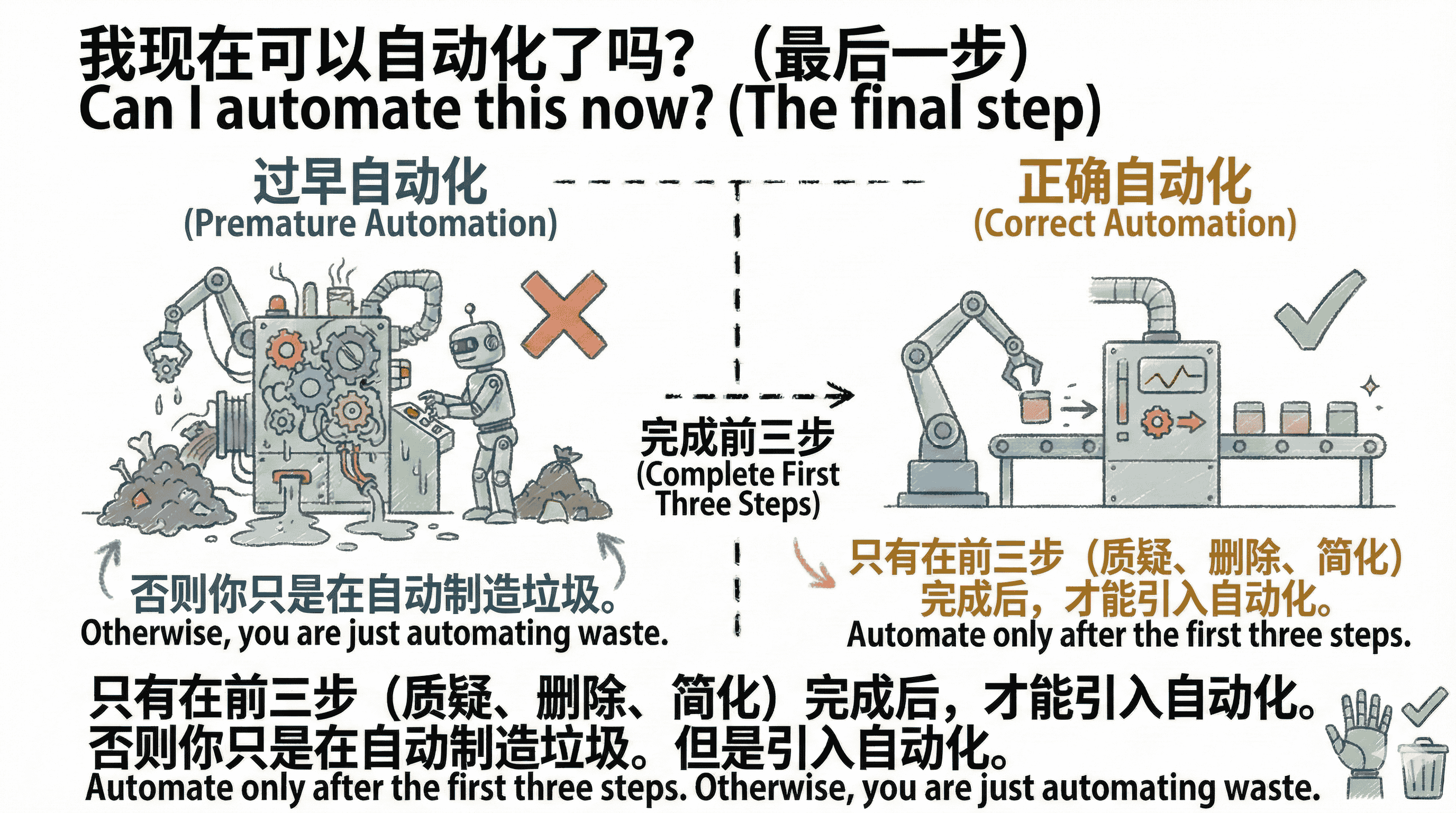
12. 我现在可以自动化了吗?(最后一步) Can I automate this now? (The final step)
只有在前三步(质疑、删除、简化)完成后,才能引入自动化。否则你只是在自动制造垃圾。 Automate only after the first three steps. Otherwise, you are just automating waste.
第四阶段:反馈与心态 (Feedback & Mindset)
核心:面对失败与批评的态度。
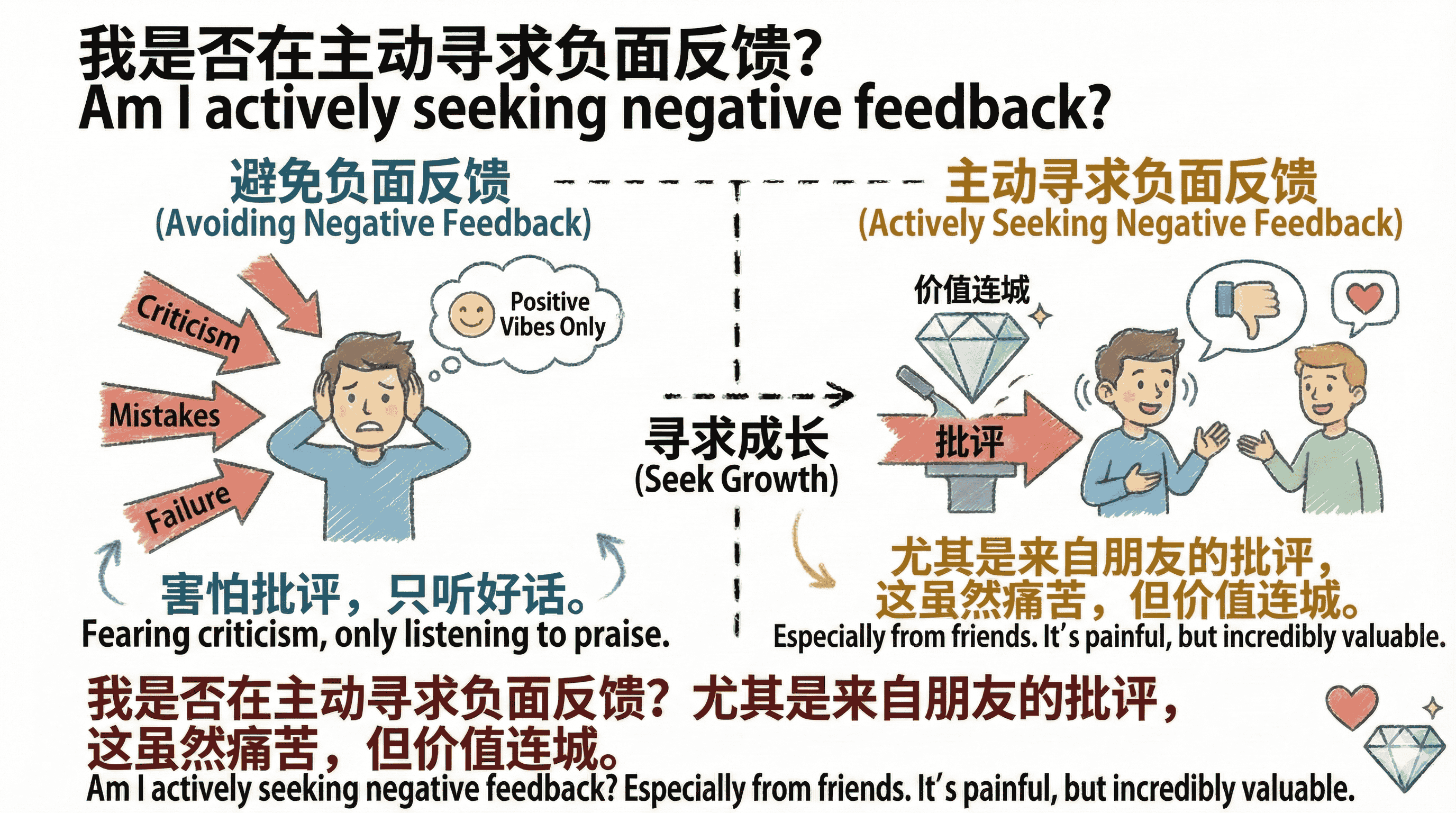
13. 我是否在主动寻求负面反馈? Am I actively seeking negative feedback?
尤其是来自朋友的批评,这虽然痛苦,但价值连城。 Especially from friends. It’s painful, but incredibly valuable.
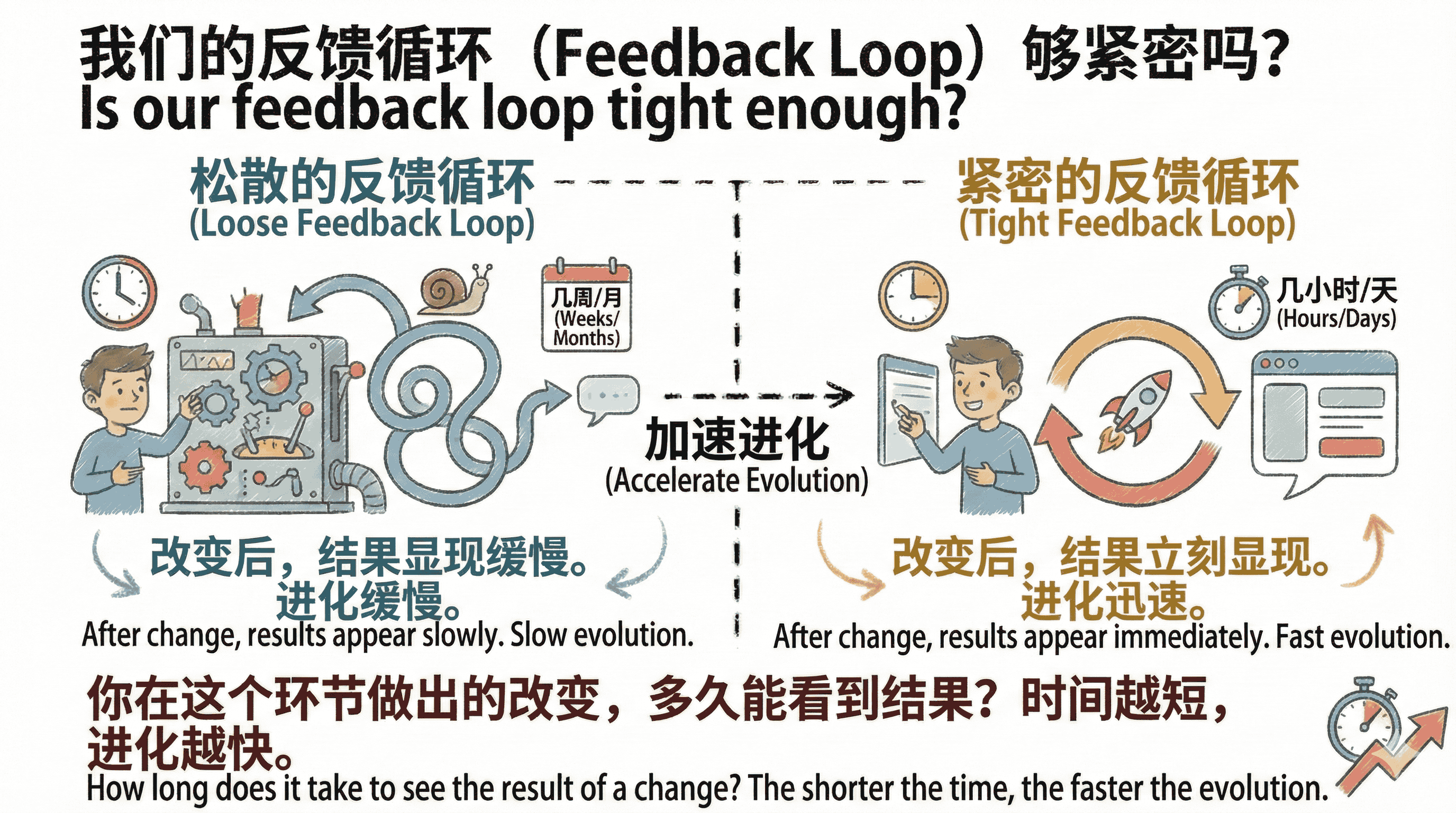
14. 我们的反馈循环(Feedback Loop)够紧密吗? Is our feedback loop tight enough?
你在这个环节做出的改变,多久能看到结果?时间越短,进化越快。 How long does it take to see the result of a change? The shorter the time, the faster the evolution.
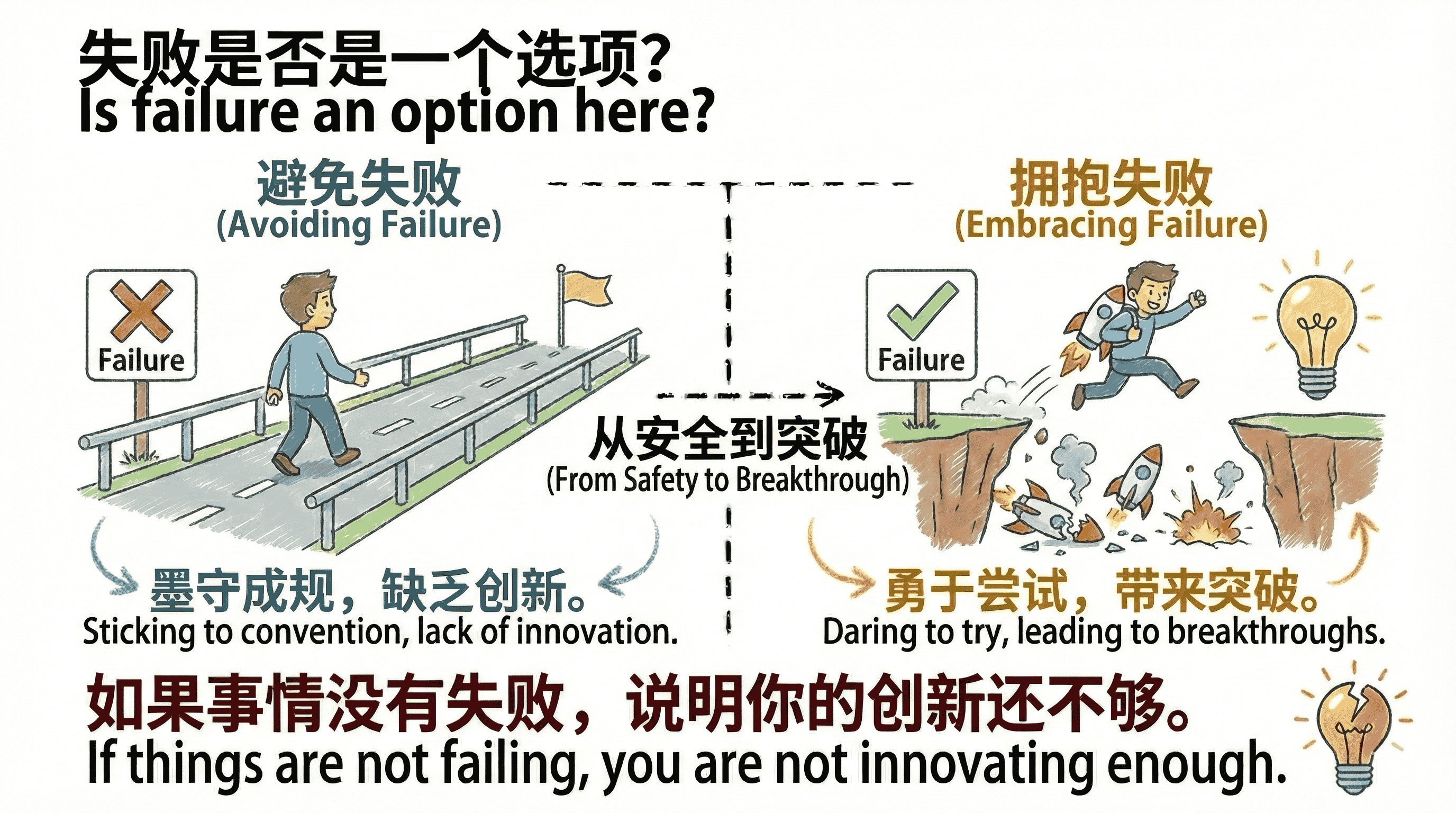
15. 失败是否是一个选项? Is failure an option here?
如果事情没有失败,说明你的创新还不够。 If things are not failing, you are not innovating enough.